Slot machines, often referred to as “one-armed SCRplay bandits,” have a fascinating history that mirrors the evolution of technology and the gambling industry itself. From their mechanical beginnings in the 19th century to today’s immersive digital experiences, slot machines have undergone an extraordinary transformation. Their journey reflects not only technological advancements but also changes in culture, regulation, and entertainment preferences.
The Birth of the Mechanical Slot Machine
The earliest version of the slot machine was developed in the late 19th century. In 1891, the Brooklyn-based company Sittman and Pitt created a gambling machine with five drums that held a total of 50 card faces. Players would insert a coin and pull a lever to spin the drums. The machine was based on poker hands, and winnings were typically dispensed by the bar in which the machine was located—often in the form of drinks or cigars rather than money.
Just a few years later, in 1895, Charles Fey of San Francisco improved upon this concept and created what is considered the first true slot machine: the Liberty Bell. This three-reel machine featured five symbols—horseshoes, diamonds, spades, hearts, and the Liberty Bell. Hitting three Liberty Bells in a row would yield the highest payout, 50 cents. Fey’s machine was simpler to use and more reliable than its predecessors, and it became an instant success. His design set the template for slot machines for decades to come.
The Rise of Electromechanical Machines
For the next half-century, slot machines remained largely mechanical. However, in the 1960s, the gambling industry saw a major shift with the introduction of electromechanical slot machines. In 1963, Bally Technologies developed the first fully electromechanical slot machine called “Money Honey.” Though the lever was still present, the internal mechanics were powered by electrical components rather than springs and gears.
The electromechanical design enabled larger coin payouts and more varied game features. It also allowed for flashing lights, electronic sounds, and more complex gameplay. Money Honey marked a turning point: the beginning of the modern slot machine era. Over time, mechanical levers were replaced entirely by push buttons, making the machines more compact and user-friendly.
The Digital Revolution
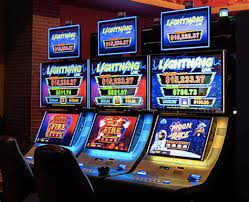
The next major evolution came in the 1980s and 1990s with the introduction of microprocessors and computer technology. These digital slot machines allowed for a much greater range of possibilities in game design, including multiple paylines, video reels, bonus rounds, and themed graphics. The Random Number Generator (RNG) became the standard for determining outcomes, ensuring fairness and unpredictability.
Video slots, which replaced physical spinning reels with graphical representations on a screen, became increasingly popular in casinos. These machines could offer licensed themes from popular movies, television shows, and musicians, significantly enhancing their appeal. The digital revolution also enabled casinos to track player data and implement loyalty programs, which helped increase customer retention.
Online Slot Machines and the Internet Boom
With the rise of the internet in the late 1990s and early 2000s, slot machines found a new home online. Online casinos began to offer digital versions of popular slot games, and players could enjoy their favorite games from home or anywhere with internet access. These games retained the RNG mechanics of their land-based counterparts and often offered even more elaborate themes and features.
One of the key advantages of online slots was their variety. Developers were no longer constrained by physical machines and could design an almost infinite range of game types. Innovations such as progressive jackpots—where a portion of each wager contributes to a growing prize pool—became especially popular and often reached life-changing sums.
Mobile and the Future of Slots
The proliferation of smartphones in the 2010s took slot gaming to yet another level. Mobile-optimized slot games meant that players could now spin the reels on the go, whether during a commute or while waiting in line. Game developers focused on creating touch-friendly interfaces, fast-loading games, and seamless mobile experiences.
Today, slot machines exist in both physical and digital formats, and the lines between the two are increasingly blurred. Many land-based casinos offer slot games with digital touchscreens and server-based gaming, which allows machines to be updated remotely with new games or features.
Looking forward, technologies such as virtual reality (VR), augmented reality (AR), and blockchain may further transform the slot experience. Some companies are already experimenting with immersive 3D slot environments and incorporating cryptocurrency payments.
Conclusion
From the clinking levers of the Liberty Bell to the tap-and-swipe action of mobile apps, slot machines have come a long way. What began as a simple mechanical novelty has grown into a multi-billion-dollar global industry. Each technological leap—from mechanical gears to microprocessors, from casino floors to cloud-based apps—has kept the slot machine relevant, exciting, and accessible. As technology continues to evolve, so too will the slot machine, always adapting to meet the tastes and preferences of the next generation of players.
 Site Title